Blog 19: Building Trust with Indigenous People - Engagement: Part 3 of 6
In this my third blog note about building trust with an Indigenous community, I discuss Engagement. In case you have skipped Part 1 of this six part blog series, allow me to briefly remind you about the five key pillars that underlie the journey of working toward mutual trust, which were taught to me by First Nations mentors living in Ontario’s far north: a) engagement; b) empathy; c) authenticity; d) thinking; and e) communication (Figure 1). Weakness in any of these pillars can threaten trust.
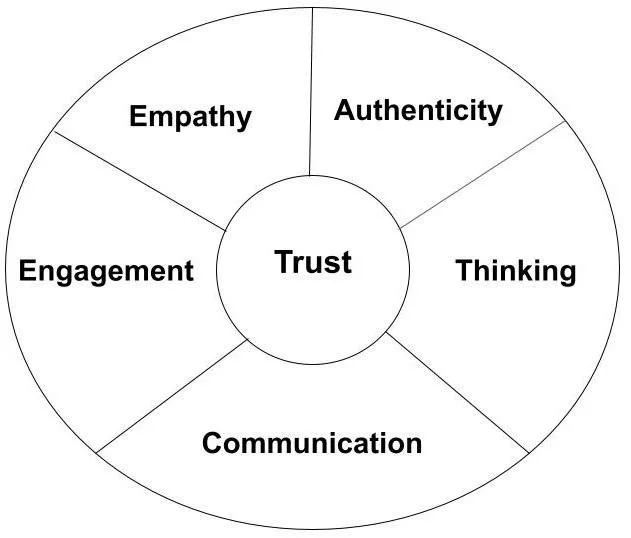
Figure 1: Some processes and skills (Engagement and Communication) and behavioral competencies (Empathy, Authenticity, and Thinking) that form the pillars of building trust with an Indigenous community.
From the lessons taught to me, engagement is the foundation. Engagement is the process during which two parties commit formally and informally to discovering each other as people and exploring each others’ interests. I learned that engagement is so much more than exchanging a few emails or having a few meetings. Engagement is about getting to know the Indigenous community people, building relationships, and sharing information formally and informally.
Two sources of information that address engagement include Bob Joseph’s Working Effectively with Indigenous Peoples blog, which is written from an Indigenous perspective, and my book entitled Walking Together: Engagement Lessons from My First Nations Learning Journey, and my these Walking Together blogs, written from a settler’s perspective. I share what I learned as seen through the eyes of an Ontario government official. I can’t repeat the entire body of information available on this topic in this note, so I encourage you to read the resources mentioned above and others. Better still, discuss with people in the Indigenous community you are engaging with.
The following are points to consider when embarking on an engagement journey:
ask the Indigenous community what their engagement expectations are;
engagement is an investment, not a cost, but it takes time, emotional energy and resources;
you must engage with the whole Indigenous community, inside and outside the boardroom (Figure 2);
relationships develop between people, not with organizations, so select your engagement team carefully, maintain the consistent presence of the team members, and be aware that if you change your team members, you risk undermining progress to date or at least slowing the relationship-building process until the new team member has built their relationships;
it may take weeks, months or even years to build a relationship;
engagement does not guarantee all Indigenous information and knowledge will be shared with you; you have to earn the trust of the Indigenous knowledge holder before they share some types of knowledge with you. There are types of Indigenous knowledge that will be shared with you with the understanding you will not share with others. And, there are some types of Indigenous knowledge that will never be shared with you.

Figure 2: To effectively engage an Indigenous community, you must get to know the community people outside the boardroom. Left to right: Noah Ooshag and Caroline Bois, both of Eabametoong First Nation. Location: Fort Hope, in the homeland of Eabametoong First Nation, Ontario, Canada. Image by Andy Fyon, April 12, 2011.
Most importantly, trust is an outcome of a successful engagement process. If you don’t engage, you cannot build trust.
Andy Fyon
February 2, 2026.