In this my fourth blog note about building trust with an Indigenous community, I discuss Authenticity. From the lessons taught to me by First Nations mentors living in Ontario’s far north and augmented by insights shared by Dr. Frances Frei, professor of technology and operations management at the Harvard Business School, I learned there are five key pillars that underlie building trust with an Indigenous community: a) engagement; b) empathy; c) authenticity; d) thinking; and e) communication (Figure 1). Weakness in any of these pillars can threaten trust.
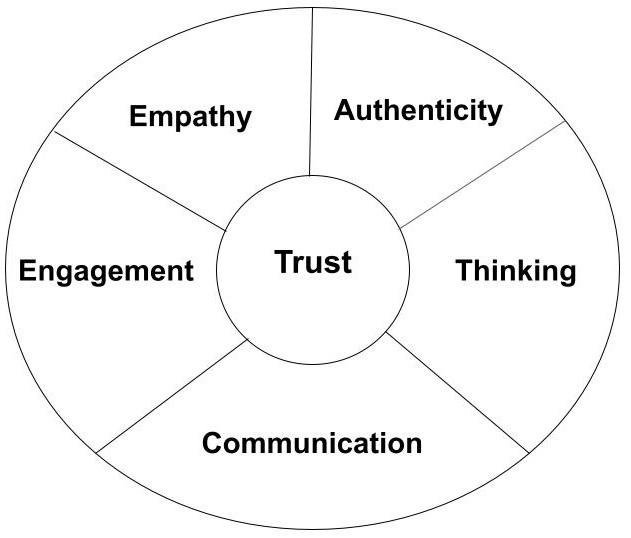
Figure 1: Some processes and skills (Engagement and Communication) and behavioral competencies (Empathy, Authenticity, and Thinking) that form the pillars of building trust with an Indigenous community.
Dr. Frei sums up the authenticity pillar in two words “be you.” People sense very quickly if you are being authentic. Now, it is easier to be yourself when you are within your social or technical bubble, with people who are like you. But, when you arrive in an Indigenous community for the first time, I can almost guarantee you won’t be with people who are like you. You will be outside your comfort bubble (Figure 2).

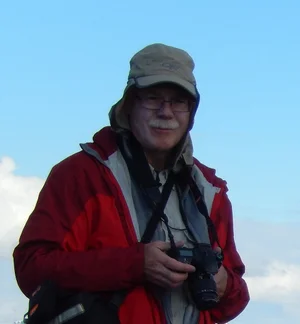
Figure 2: Being authentic while sharing information is a key part of building trust. Here, on the left, Bruce Jacob (left: Webequie First Nation), Brian Atkinson (centre: formerly of the Ontario Geological Survey, RIP), and Jon Spence (right: Webequie First Nation) joke and discuss map information Webequie First Nation, Ontario, Canada. Photo composed in Webequie, in the homeland of Webequie First Nation, October 19. 2007.
You may find it hard to be yourself for many reasons. Perhaps you fear offending someone because you are not familiar with the customs of the Indigenous community you are visiting. Perhaps you fear answering hard questions for which there are no easy answers. Perhaps you are concerned that your agenda, your words or who you represent may offend the Indigenous people and create conflict with the community. Perhaps you are a technical person and you know that political leaders plan to attend the meeting, but you have no authority to address political questions. There are many factors that can influence or even challenge your ability to be authentic.
Despite being in a cultural milieu that is new to you, there are some ways to remain authentic:
be honest;
be respectful and don’t be rude;
don’t be afraid to admit you are learning and will make mistakes;
don’t be afraid to say “I don’t know, but help me understand. I will get back to you with an answer.”
To allay your fears, try to connect with a person in the Indigenous community you plan to visit who is able to inform you about the community history, culture, issues, ceremonies and meeting process. That information will help you become familiar with, and prepare for, issues that might surface during the meeting, especially ones that have nothing to do with your organization, your authority, or your project. I guarantee someone will ask a question that has nothing to do with the purpose of your visit or your authority.
I have been at meetings where a visitor used words that created obfuscation at best and deception at worst. If you are inclined to obfuscate, ask yourself if you are the right person to be involved in the engagement and trust-building journey.
Some people think they can hide who they really are. That deception may work for the first and maybe the second community meeting. But, eventually, the real you will surface. The deception will be exposed. At that point, all your past engagement efforts and your intent to work towards trust will collapse.
The key message: just be you!
Trust is an outcome of a successful engagement process. If you don’t engage, you cannot build trust.