Blog 21: Building Trust with Indigenous People – Communication: Part 5 of 6
In this part 5 of 6 blog note about building trust with an Indigenous community, I discuss Communication. Recall, I am not an expert. I am sharing lessons I learned from First Nations mentors living in Ontario’s far north so you don’t repeat the mistakes I made.
In case you have skipped Part 1 of this six part blog series, I learned there are five key pillars that underlie the journey of working toward mutual trust: a) engagement; b) empathy; c) authenticity; d) thinking; and e) communication (Figure 1). Check out the other parts of this blog series to gain insights about the other Trust-building topics.
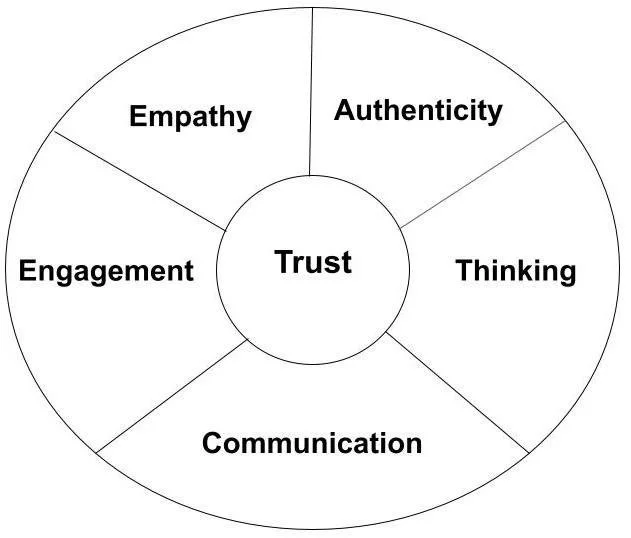
Figure 1: Some processes and skills (Engagement and Communication) and behavioral competencies (Empathy, Authenticity, and Thinking) that form the pillars of building trust with an Indigenous community.
There are at least two common communication styles I have seen used to exchange information with Indigenous community people:
wandering, storytelling style, which is full of twists, turns, mystery and drama, before it gets to the key point; and
to-the-point style, followed by supporting evidence.
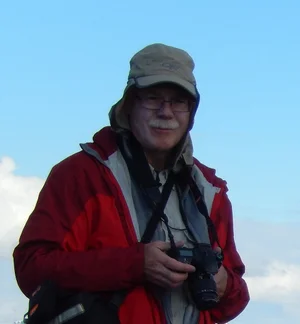
Each style has its time and place. The appropriate approach is often situational and may change as the community gets to know you. Some Indigenous Elders communicate using captivating stories. Elder Louis Bird (Figure 2), Weenusk First Nation on the Hudson Bay coast, is a respected Cree storyteller. When he speaks in his community, the audience respects and listens to him. But you are not Elder Louis Bird. You will not have earned the respect that allows you to share your information using a storytelling style before getting to your point.

Figure 2: Cree elder Louis Bird, Weenusk First Nation, a respected storyteller, spoke with us about his published books and his efforts to record cultural stories of the Omushkegowak in his native language. The Cree word Omushkegowak means “people of the swamp or muskeg” and refers to the Cree First Nations people who live on the western side of Hudson Bay and James Bay. Photo composed in Peawanuck, in the homeland of Weenusk First Nation, Ontario, Canada, September, 20, 2012.
When speaking at a First Nations community meeting, I learned to lead off with my key points, followed by supporting information. That ensured I shared the information I was requested to speak about, and began to hear the very important community concerns, in case the meeting ended prematurely. That is not my natural communication style. And I found it hard to communicate that way. But, I attended many meetings that ended prematurely so I had to adjust.
Effective communication is not just about talking. Communication also requires listening and use of approaches and tools to ensure mutual understanding. Listening is about understanding and interpreting verbal and non-verbal cues (Figure 3); it informs your communication approach and the tools you use. If you can’t communicate your ideas effectively with the Indigenous audience, and listen to understand their concerns, it is likely they will not trust you.
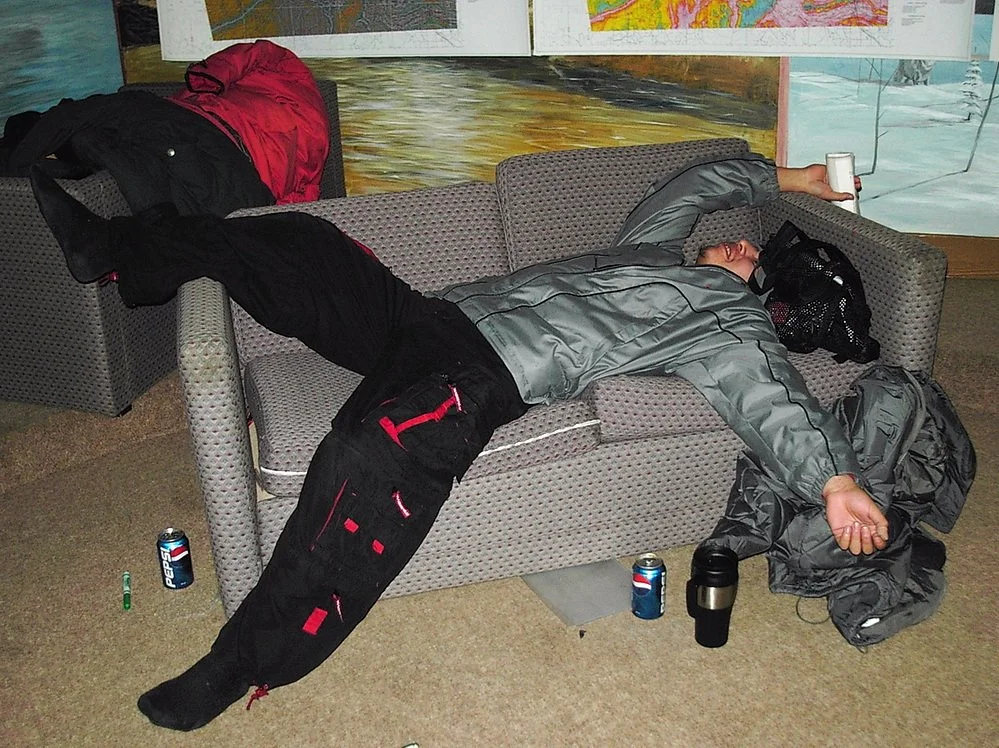
Figure 3: This participant demonstrated very clearly, using nonverbal cues, that we had alienated the audience, that he was saturated and did not hear any more of what we had to share. Photo composed in a remote First Nations community in northern Ontario, February 13, 2003.
Also, meetings in remote Indigenous communities are often complicated and dynamic. Meetings can be interrupted by children crying (Figure 4), people coming and going, cell phone calls, or the agitated pilot of your chartered aircraft who just received an ominous weather update that requires immediate departure. If you use a wandering storytelling style that climaxes with your key point at the end of the presentation, your presentation may be prematurely terminated before you get to your key points. (see C9 Importance is Relative in my book Walking Together)!
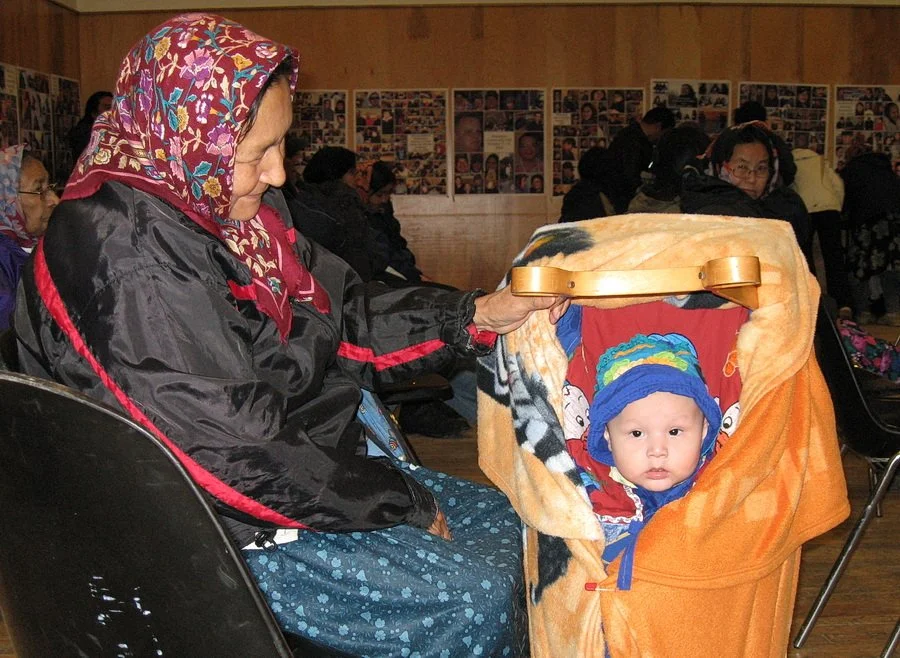
Figure 4: Elder Caroline Yesno (RIP; Webequie First Nation) sits with her grandchild in a tikinagan during a community information meeting. Children were always present during information meetings. Photo composed in Webequie, in the homeland of Webequie First Nation, Ontario, Canada, October 19, 2007.
Other factors to consider when constructing a communication approach include:
know who you are engaging with and how they expect information to be shared;
work with the community authorities to create communication tools and approaches that work for that Indigenous audience; this could include working with local interpreters, posters and PowerPoint material, including descriptions that use the local Indigenous language dialects;
avoid technical language that is foreign to the audience and/or difficult for the interpreter to describe to the people;
lead off with your key point and followed by supporting information to ensure that if the meeting ends prematurely the community will have information to consider.
Communication with an Indigenous community is an art and a science. You cannot build trust if you cannot effectively communicate your ideas in a dynamic and complicated venue. And most importantly, you must learn to listen.
February 28, 2026