Blog 23: Building a Relationship with Indigenous People
Successful relationship-building with Indigenous people is the result of meaningful engagement. Engagement is a process. And relationships are essential prerequisites for any collaboration.
Building a relationship is part of a process rooted in mutual respect, transparency, and a long-term commitment. The process is not a legal obligation or a series of tick boxes. The process is a meaningful investment of time and resources that may require a fundamental shift in how non-Indigenous organizations and people approach their work and see the Indigenous world.
Key points for building these relationships include:
1. Nation-to-Nation Mindset
Equality: Treat Indigenous Nations as equal nations, not as stakeholders or clients. They expect to be treated as equals.
Relationships First, Business Second: In many Indigenous cultures, personal relationships must be established before business or technical discussions can advance.
Cultural Humility: Acknowledge that you (likely) have limited knowledge of the Indigenous community’s history (Photo 1), governance protocols, and spirituality. Be willing to ask questions and learn.

Photo 1 Exchanging gifts is a common cultural practice in Indigenous communities. Left: Chief Charlie Okeese (RIP; Eabametoong First Nation, Ontario, Canada); right: Harvey Yesno ( Eabametoong First Nation, Ontario, Canada) dressed in their regalia, at a cultural event to commemorate the signing of Treay 9, July 19, 2005. Image by Andy Fyon.
2. Whole Community Engagement Model
It is important to build relationships with a broad cross-section of an Indigenous community. To build such relationships, engagement should occur simultaneously at three levels:
Chief-to-Chief: High-level leaders from your organization connect with the Chief and Council to endorse and sustain the relationship. Carefully consider the delegation of responsibilities and authorities.
Technical-to-Technical: Experts from both sides collaborate on project details, such as land-use or technical data. Carefully consider the delegation of responsibilities and authorities.
Community-to-Community: This involves connecting with individuals, including Elders (Photo 2), gender groups, families, and youth (Photo 3) through formal and informal meetings, as well as casual conversations in the community. This is where trust is often built. When anticipating broad community engagement, consider if your team members are prepared to talk with a range of people with different perspectives and sometimes difficult questions. Some may be angry, some may bring up topics that have nothing to do with your business, but are important to the community members.
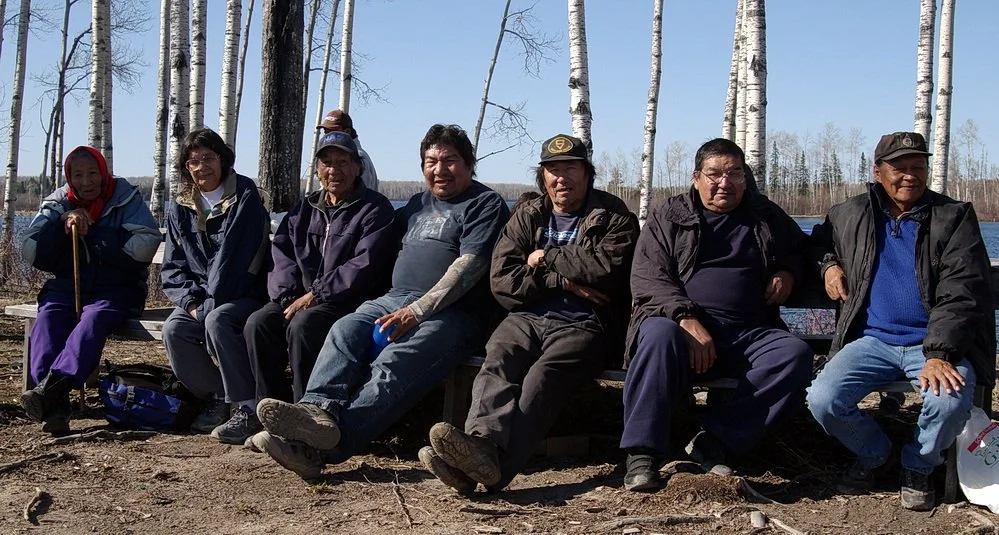
Photo 2: A group consisting mostly of First Nations elders gathering for a spring feats in the homeland of Neskantaga First Nation, Ontario, Canada. Image by Andy Fyon, May 17, 2005.
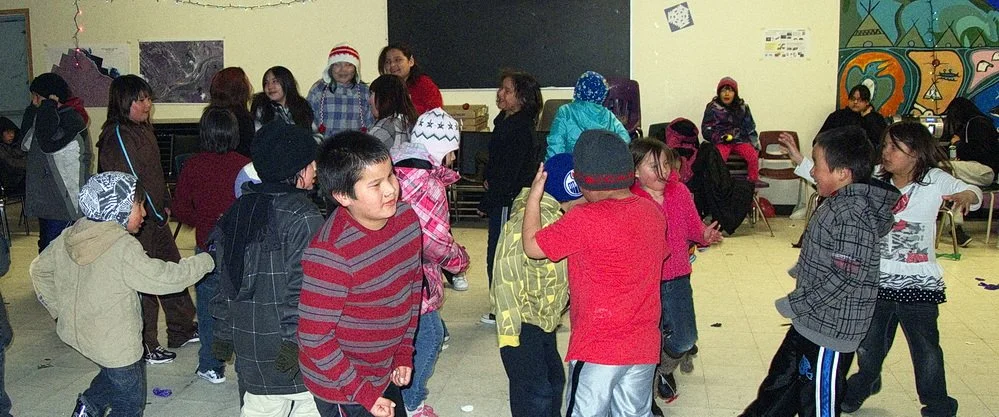
Photo 3: Children at a youth dance in the community of Fort Severn, in the homeland of Washaho Cree Nation, Ontario, Canada. Image by Andy Fyon, March 30, 2012 .
3. Continuity and Presence
Facial Continuity: Relationships develop between people, not organizations. Keeping the same individuals on your engagement team over many years is vital; frequent staff turnover poses a challenge to building relationships.
"Show Up!": Relationships are an outcome of repeated visits over months or years. Community members may need to see you consistently before they will feel comfortable approaching you.
Be Visible: When invited, participate in the social life of the community. Consider what being visible means to your team. Consider the range of activities that your team may be involved in (e.g., feasts, school visits (Photo 4), and community walk-abouts with no agenda).

Photo 4: Youth carrying out the volcano science experiment, at the Lawrence Wesley Education Centre, in the homeland of Cat Lake First Nation. Image by Andy Fyon, May 3, 2012.
4. Respect and Understanding
Seek Understanding: Don’t dismiss ceremonies, experiences or stories that might challenge your world view. Seek to understand them.
Observe and Listen More than You Talk: Observing and listening are critical to gaining cultural insights and identifying potential triggers or misunderstandings.
Remember that Words Matter: Words like "opportunity," "benefits," or "partnership," may have very different meanings to First Nations people. Your "opportunity" may be perceived as a community "threat."
Avoid Jargon: Use clear, plain language and analogies that relate to the community's context.
Seek Permission: When uncertain, seek permission. You may gain important cultural and social insights.
Offer Practical Support: Look for ways to support community-based initiatives (e.g., land-based learning or providing food for a feast).
There is no "silver bullet" or single recipe for success. Each Indigenous Nation is unique. Building a relationship together is a journey of mutual discovery that requires integrity, honour, and the patience to allow the process to unfold in its own time.
Andy Fyon: March 25/26